AC repair in Woodland Hills
Valley heat-belt neighborhood. attic duct runs, side-yard condensers, garage panels, condo equipment closets, and dense Warner Center parking
homes that need diagnosis before anyone pushes a full replacement. The first visit should document the symptom, access route, shutoff, utility feed, permit assumption, and the supporting trade that could change the repair.
no-cool calls, short cycling, weak airflow, frozen coils, thermostat problems, condenser noise, and breaker trips during heat waves are not all the same problem. Loadpath LA uses a field sequence that keeps homeowners from buying equipment before the home is ready for it.
Ranges are planning ranges, not a final quote. The field diagnosis decides whether the work is a repair, replacement, safety shutdown, utility coordination item, or permit-driven project.
AC Repair work is not just a line item. It is a decision about no-cool calls, short cycling, weak airflow, frozen coils, thermostat problems, condenser noise, and breaker trips during heat waves. Loadpath LA treats the service as a path through the house: where the system starts, what feeds it, what can safely shut it off, and what other trade can block the repair. For LA homes, the visible symptom is often only the final clue. A cooling complaint may come from duct leakage or a weak disconnect. A panel complaint may come from EV, HVAC, and kitchen loads stacking on the same old service. A plumbing complaint may trace back to a bad shutoff or a sewer line that needs camera evidence before anyone digs.
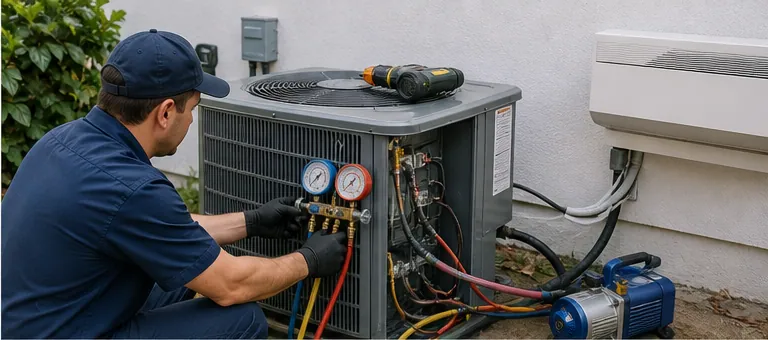
The visit starts with the complaint, then follows the support path. For HVAC, that means checking the equipment, controls, utility feed, shutoff, safety clearances, and access route. The technician should document what is safe now, what is failing, what can be repaired, and what would require permit or inspection review. That structure helps homeowners compare options instead of comparing vague estimates.
Urgency is not only about inconvenience. No cold air during a heat wave, Breaker trips when the condenser starts, Ice on refrigerant lines or coil, and Burning smell from air handler or disconnect are signals that the issue can affect safety, property damage, or basic habitability. The correct response may be shutting off water, power, or equipment before booking the repair. Once the home is stable, the booking notes should include photos and the exact symptom timeline.
For AC repair, the biggest cost drivers are compressor or fan motor condition, refrigerant leak tracing, attic or roof access, electrical disconnect condition, and age and efficiency of the system. Access can be as important as the part. A simple component behind a rooftop unit, hillside condenser, tight crawlspace, or HOA-controlled garage can require more labor than a larger part in an open garage. Permit scope, inspection timing, and finish protection also change the real price.
Ask what failed, what supports it, whether the supporting trade is safe, what code or permit assumption is being made, and what evidence supports repair versus replacement. Ask whether the estimate includes access, startup testing, cleanup, photos, and next-step documentation. A good AC repair recommendation should be specific enough that another qualified person can understand the reasoning.
| Urgent signal | Why it matters |
|---|---|
| No cold air during a heat wave | Can affect safety, property damage, habitability, or whether the system should be shut down before repair. |
| Breaker trips when the condenser starts | Can affect safety, property damage, habitability, or whether the system should be shut down before repair. |
| Ice on refrigerant lines or coil | Can affect safety, property damage, habitability, or whether the system should be shut down before repair. |
| Burning smell from air handler or disconnect | Can affect safety, property damage, habitability, or whether the system should be shut down before repair. |
Valley heat-belt neighborhood. attic duct runs, side-yard condensers, garage panels, condo equipment closets, and dense Warner Center parking
historic residential district. finish protection, crawlspace work, old panels, garage subpanels, and sewer cleanout limitations
Use the external scheduler and include photos of the equipment, panel, shutoff, and work route. No internal fake booking form is used.
homes where equipment age, duct condition, and electrical capacity should be reviewed together
owners who need HVAC design tied to panel capacity and permit sequencing
homes that still use gas furnaces, wall furnaces, or attic furnaces and need safety-first diagnosis
properties where routing, condensate drainage, outdoor placement, and electrical capacity matter more than a simple equipment price
homes where the system is not broken, but the air path is failing
homes affected by canyon dust, wildfire smoke, marine moisture, or tight remodels
Book quickly when the issue affects safety, cooling, hot water, sewage, or electrical load. If there is gas odor, sparking, flooding, or sewage backup, stabilize the home first, then use the booking link once the immediate hazard is controlled.
It depends on scope and jurisdiction. Like-for-like diagnosis may not need the same paperwork as equipment replacement, panel work, water-heater replacement, sewer repair, or ADU utility changes. The visit should identify the permit path before expensive work begins.
Send photos of the equipment, panel, shutoffs, exterior access, model tags, error codes, and any parking or HOA instructions. That reduces repeat trips and helps the technician bring the right diagnostic tools.
The biggest cost drivers are access, equipment age, permit requirements, parts availability, utility coordination, finish protection, and whether another trade must be solved first.
"The written scope named the symptom, access issue, and condition that would change pricing. That was useful for our Pacific Palisades house because whole-home rewiring depended on panel condition, and coastal condenser corrosion could not be ignored. After the visit, the written scope made the repair-versus-replace decision much easier."
"The sewer line inspection visit in Porter Ranch stayed practical from the first call. We mentioned the Rinaldi corridor access issue, and the technician checked camera findings before pricing bigger work. Because heat pump sizing was documented with photos, the visit avoided a second trip because the access issue was handled early."
"Our historic canyon neighborhood near Briar Summit edge had more access issues than expected, but the heat pump installation scope stayed clear. The technician explained how equipment efficiency affected the labor and why line-set routing had to be checked before we approved anything. In the end, the photos and closeout notes matched what we saw at the house."
"The technician started with the route, shutoff, and equipment location instead of jumping straight to a menu price. For electrical panel upgrade in Echo Park, that mattered because service size and old panels could have changed the scope. The best part was that the estimate separated immediate stabilization from the follow-up scope."
"For a Carthay Circle property around South Carthay edge, the visit felt organized and specific. The repair option, replacement trigger, and access and safety controls issue were all written down. We also appreciated that old wiring was treated as a real field condition, not a generic warning, so the notes gave our property manager enough detail to approve the next step."
"We sent photos before the appointment, and it helped. The fixture installation visit focused on valve access, the Morrison Ranch access route, and the local concern around heat pump sizing instead of guessing from the service label alone. That made the final recommendation useful because the technician explained what was safe to use and what needed to stay off."
These references are used to frame permit, safety, energy, utility, and inspection context. They do not replace field diagnosis, but they keep the page useful and verifiable.